











.png?width=397&height=365&name=CPDmember%20(1).png)

On Friday, 24th October 2025, Firntec hosted the webinar “Practical Approach to Building Compliance in Healthcare Environments”, bringing together industry experts to discuss key challenges in healthcare fire safety. From fire risk assessments and compartmentation strategies to the role of Authorising Engineers, attendees gained practical insights and expert answers to their pressing questions. In this blog, we’ve compiled the highlights and Q&A takeaways to provide a valuable resource for anyone looking to strengthen compliance, safety, and best practices in healthcare settings.
How can hospitals ensure resilience and continuity of life critical power systems to maintain hospital operations in the event of a fire that affects either their electrical or plant rooms?
Maintaining uninterrupted power in hospitals is absolutely critical. While most hospitals have backup generators, the rise of battery-based uninterrupted power supplies (UPS) introduces new challenges. Lithium-based batteries, similar to those used in electric vehicles, are particularly difficult to extinguish when they catch fire in some cases, such fires spread quickly and can last for hours.
This presents a significant concern when considering that compartmentation is often designed to withstand 30/60/90 minutes, particularly when batteries are located at the heart of a building. Unfortunately, legislation has not yet fully caught up with the technological advancements in battery storage.
However, there are innovative solutions available. We’ve worked with a company offering a non-aerosol suppression system that is ideal for environments such as data centres and hospital battery rooms. Instead of using water or traditional gases, this system triggers a chemical reaction that interacts directly with the battery fire’s chemistry, effectively extinguishing it.
The advantages are substantial:
- The suppression agent is breathable and non-toxic.
- It leaves behind only a fine white powder that can be vacuumed up.
- There’s no water damage, and the room remains otherwise unaffected.
This technology has been rigorously tested and is already in use across various industries. Hospitals looking to enhance their fire resilience, particularly in areas with battery storage or UPS systems, should consider these types of suppression systems.

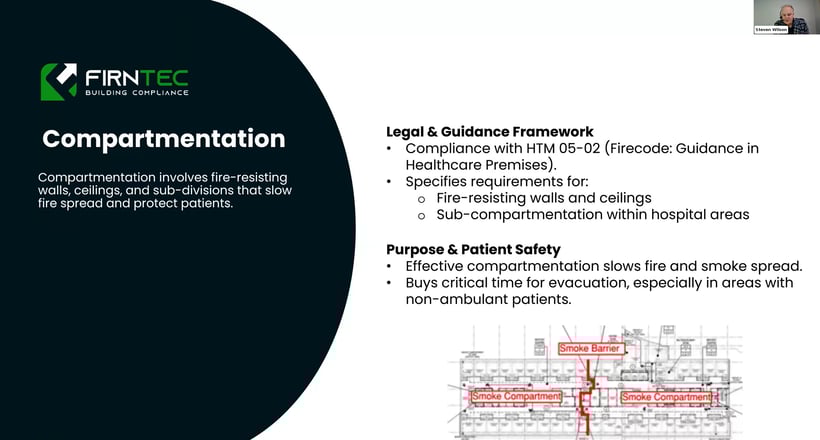
How can hospitals maintain compartmentation integrity during refurbishment or retrofitting works?
The first step is to ensure that your existing compartmentation is sound. A basic fire risk assessment is not enough; a comprehensive compartmentation health check should identify any weaknesses before work begins.
Once that’s established, one of the most effective approaches we’ve seen is implementing a permit-to-work system.
Each contractor, even internal IT teams, must obtain a permit before carrying out any work. The permit clearly defines the scope of work and responsibility for maintaining fire integrity. If a contractor penetrates a fire barrier (for example, when installing cables), they must ensure it is repaired immediately or report it for follow-up.
This process not only ensures accountability but also allows estates teams to track and manage any breaches effectively.
Although there’s no legal requirement specifying how often compartmentation should be inspected, we recommend an annual review as best practice, similar to what’s done in social housing. This helps identify issues caused by 'hidden culprits' such as fire dampers, pipe layers, or cable installers who may inadvertently compromise fire barriers after installation.
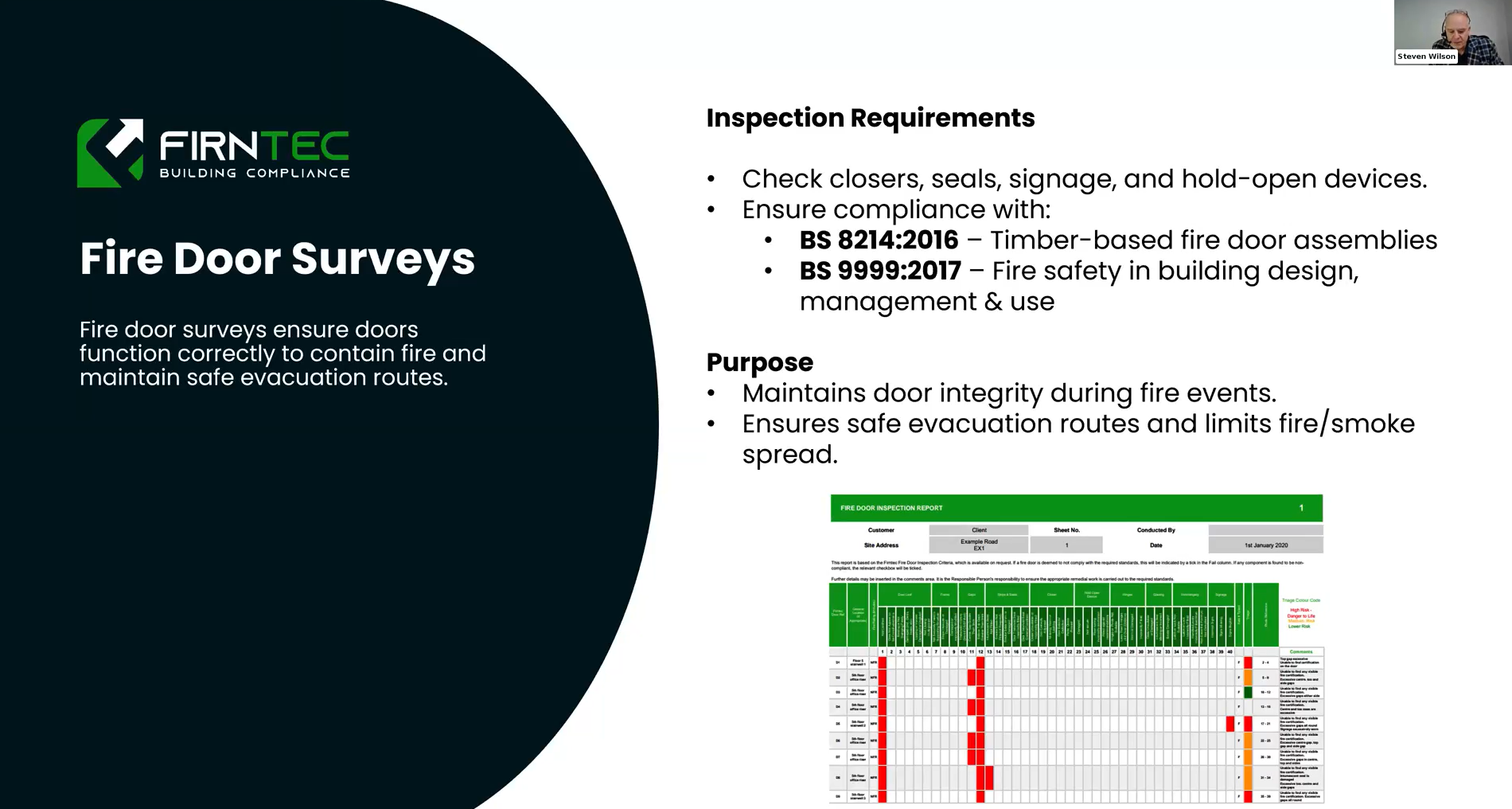
What practical advice can you offer on maintaining fire doors in high-traffic hospital environments?
Hospitals face a unique challenge with fire doors due to constant traffic and heavy use. While budgets are always a concern, it’s important to remember that 'cheap can be expensive.'
Low-cost doors or doors without adequate protection often fail prematurely under daily wear and tear. High-traffic areas, where trolleys, porters, and equipment constantly move, require durable doors with appropriate protection.
A few key recommendations:
- Choose the right door for the right location. Not all fire doors are designed for heavy-duty use.
- Invest in interchangeable protective features. Some modern doors have replaceable edge and surface protection, allowing damaged parts to be swapped out without replacing the entire door.
- Consider life-cycle costs. While the upfront investment may be higher, properly specified doors with replaceable protection are more cost-effective over time.
Independent studies have validated that choosing the correct door and protection system reduces total maintenance and replacement costs significantly.
If your organisation is facing challenges related to:
- Fire safety in plant rooms or battery storage areas
- Maintaining compartmentation during refurbishments, or
- Fire door durability and compliance
Please reach out to Firntec for tailored advice and support via our contact page.